
Hip pain has a way of quietly reshaping your life around it. You start choosing the chair that is easier to get out of. You skip the hike because you know what the descent does to you. You stop sleeping on your preferred side. You modify, adjust, and work around it until the workarounds become the routine.
And at some point, someone likely told you that this is just what happens. That the joint is worn. That it will probably get worse. That eventually you may need a replacement.
For some people, joint replacement is the right answer. But for a significant number of people dealing with chronic hip pain, it is not the inevitable next step it is often presented as. What tends to be missing from the conversation is a thorough understanding of what is actually driving the pain, and whether the hip joint itself is the source or whether it is bearing the consequences of a problem that originated somewhere else.
That distinction matters enormously for how you approach treatment.
Why the Hip Is Rarely a Simple Problem
The hip is one of the most demanding joints in the body. It is responsible for transferring load between the lower extremity and the spine, stabilizing the pelvis during walking and standing, and producing the range of motion required for almost every activity that involves moving from place to place. When it is working well, it does all of this without drawing attention to itself. When it is not, the effects tend to show up well beyond the hip itself.
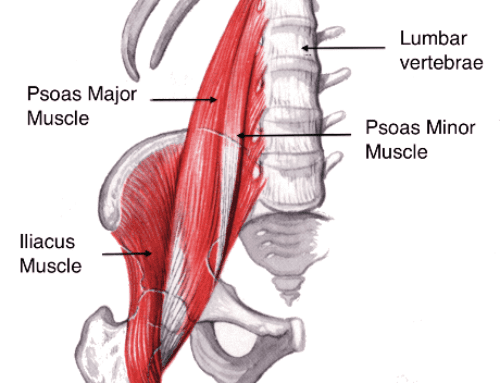
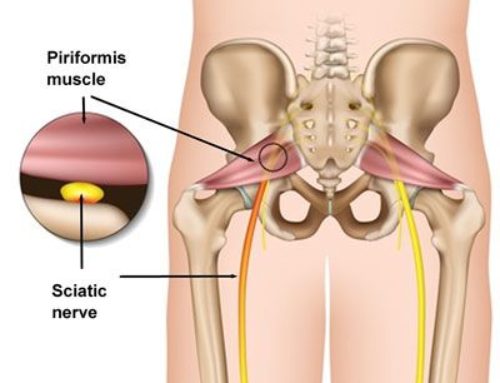
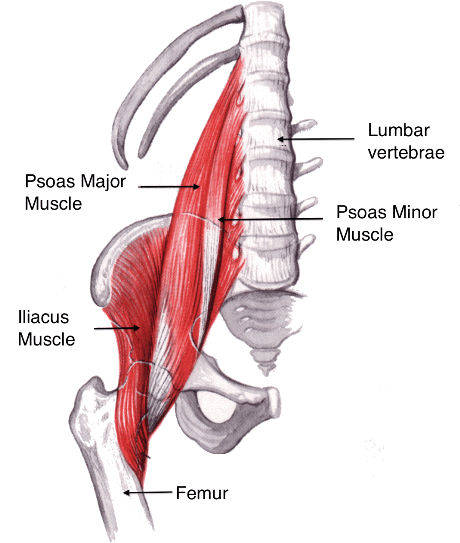
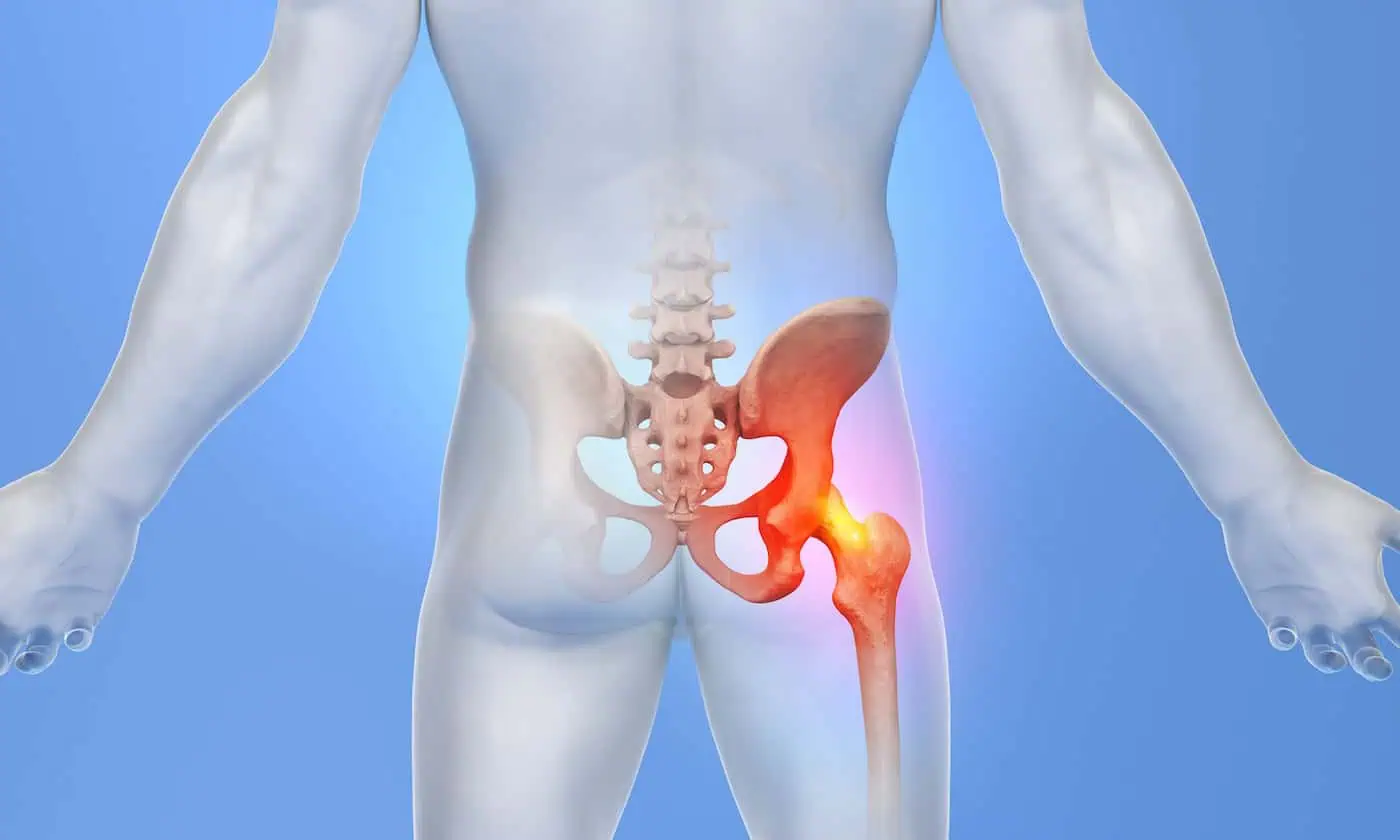
Hip pain can come from inside the joint itself, from irritation of the cartilage ring that lines the socket, early wear on the joint surface, or changes in how the ball and socket fit and move together. It can also come from the surrounding structures: the tendons of the gluteal muscles where they attach to the outer hip, the hip flexors that run along the front of the joint, the inner thigh muscles, and the deep rotator muscles that keep the ball of the hip centered in the socket.
It can also come from above or below. A stiff lower back that does not rotate well forces the hip to compensate. Foot mechanics that drive internal rotation of the leg change the stress environment inside the hip joint. Weakness in the muscles that control pelvic position changes how the hip loads with every step.
This is why hip pain that has not responded well to previous treatment often reflects an incomplete picture of what is actually being loaded and why. Treating the hip in isolation, without understanding what the hip is being asked to do and where the excess demand is coming from, produces results that are temporary at best.
What Chronic Hip Pain Often Signals
There are several patterns that show up consistently in people with chronic hip pain, and recognizing them is the first step toward understanding what the body is trying to communicate.
- Stiffness after sitting that takes several minutes to ease with movement, often worse first thing in the morning
- Pain on the outer hip or deep in the joint that is provoked by stairs, inclines, or prolonged walking
- A clicking or catching sensation during certain movements, particularly hip rotation or transitioning from sitting to standing
- One-sided tightness or discomfort that never fully resolves regardless of stretching or rest
- Low back or sacroiliac joint pain that accompanies or alternates with hip symptoms, suggesting the two areas are sharing a load problem
- Pain that has gradually expanded its territory, showing up in new positions or at lower activity thresholds than it used to
That last pattern is particularly worth noting. Hip pain that is slowly becoming provoked by less and less activity is not simply aging. It is a sign that the underlying mechanics driving the load have not been addressed, and the body’s capacity to tolerate that load is declining faster than it is being rebuilt.
The Role of Hip Stabilizers in Pain and Function
One of the most consistent findings in people with hip pain is that the muscles responsible for stabilizing the hip during movement are not doing their job adequately. This is not always about weakness in the traditional sense. It is often about timing, coordination, and the sequencing of muscle activation during dynamic tasks.
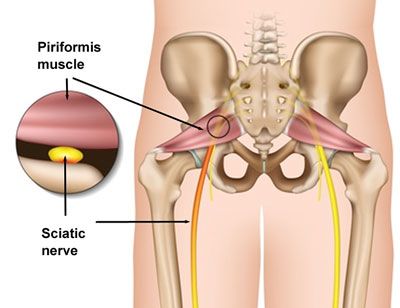
The hip stabilizers include the deep rotator muscles of the hip, a group that rarely gets discussed but plays a critical role in controlling how the ball of the hip joint sits within the socket when the body is under load. They also include the muscles on the side of the hip that control pelvic position when you are standing on one leg, and the deeper fibers of the glute that contribute to extension and rotation control.
When these muscles are underperforming, the hip joint absorbs load in a less mechanically favorable position with every step. Over time, this produces the cumulative irritation that most people experience as chronic hip pain. It also changes how neighboring structures absorb load, which is why this kind of weakness often shows up alongside IT band irritation, knee pain, low back symptoms, and deep buttock discomfort.
Addressing these muscles requires more than generic glute strengthening. It requires identifying which specific components of the stabilizer system are lagging, in what movement contexts, and building a progressive loading plan that addresses those deficits in a way the nervous system can actually integrate into daily movement.
Hip Mobility and Why Stretching Alone Does Not Solve It
Most people with hip stiffness have spent significant time stretching. Hip flexor stretches, piriformis stretches, figure-four stretches, foam rolling the IT band. Some of this provides temporary relief. Very little of it produces durable change in hip mobility, and there is a reason for that.
Passive stretching changes the length of a muscle temporarily but does not change how that muscle is used during movement. If the hip is restricted into internal rotation because the deep external rotators are overworked and guarded, stretching those muscles creates a brief window of increased range. But as soon as the hip is loaded again, those muscles reassume their protective role and the restriction returns.
Durable hip mobility comes from active range of motion work, controlled movement through the available range that trains the body to actually use that mobility rather than protect against it. It also comes from addressing why the restriction developed in the first place. A hip that has been compensating for a stiff lower back for years will not open up meaningfully until that stiffness is addressed. A hip that is protecting an irritated labrum will continue to guard until that irritation is resolved.
This is why people who stretch consistently but see little change in their hip mobility are often working on the symptom rather than the source. The restriction is real. The tissue is genuinely less mobile. But the input maintaining that restriction is upstream, and that is where the effective work needs to happen.
Gait and Movement Patterns Drive Hip Load
The way you walk is one of the most significant contributors to how much load your hip accumulates over time. Most people with chronic hip pain have unconsciously modified their gait to offload the painful side, which typically means shortened stride length, reduced hip extension in the terminal phase of the step, and compensatory trunk lean or pelvic shift toward the affected side.
These modifications reduce pain in the short term. Over time, they reinforce the mechanical deficits that created the problem. Reduced hip movement through each step increases the demand on the hip flexors and limits how much the glutes contribute to forward propulsion. Pelvic shift toward the painful side compresses the hip joint in a less favorable position. Trunk lean alters the load path through the entire lower extremity.
Retraining gait mechanics is not about cueing someone to walk differently. It is about identifying which aspects of walking are loading the hip beyond its current capacity, understanding why those patterns exist, and systematically building the mobility and strength that allow the gait pattern to change naturally. When that work is done well, the gait correction tends to hold because it is supported by improved capacity rather than sustained conscious effort.
When Regenerative Therapies Support the Process
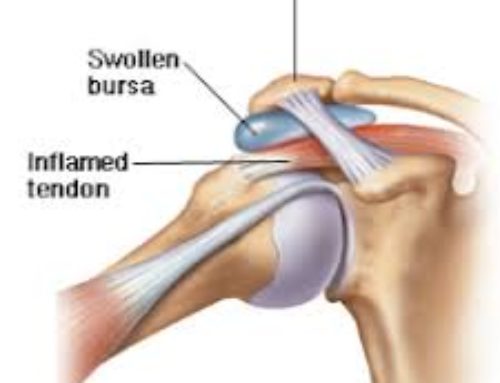
For hip pain that involves the tendons around the joint, particularly chronic tendon irritation at the outer hip or along the front of the hip, the tissue itself may be in a state where it is not responding optimally to loading alone. In these cases, regenerative therapies can help create a better tissue environment for the movement-based work to take hold.
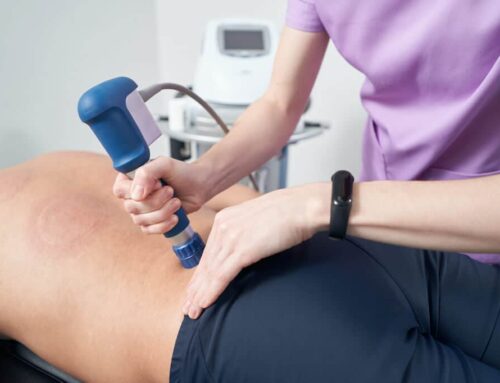
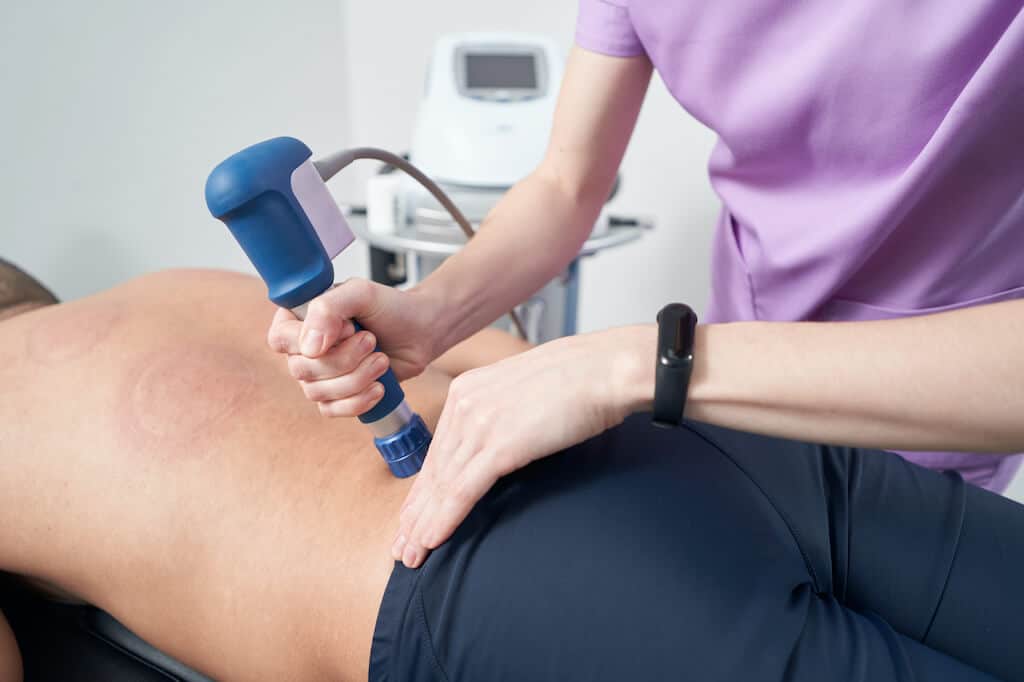
DPT offers Extracorporeal Pulse Activation Technology (EPAT), a shockwave therapy that uses targeted sound wave energy to stimulate blood flow and promote tissue repair. For chronic tendon conditions around the hip that have not responded to conservative care alone, EPAT can shift tissue out of a stuck inflammatory cycle and make it more responsive to progressive loading. Extracorporeal Magnetotransduction Therapy (EMTT) complements this by using electromagnetic energy to calm inflammation and support healing in deeper tissue. The two are often used together when the clinical picture warrants it.
As with all passive interventions, these therapies work best when they are part of a broader plan that addresses the movement and load distribution issues driving the hip condition. They can reduce the barrier to loading and make rehabilitation more effective. They do not replace the mechanical work that produces lasting change.
What You Can Start Noticing Today
The next time you stand up from a chair, pay attention to how your hips participate in the movement. Notice whether you push evenly through both legs or whether you shift your weight to one side and rely on that leg to do most of the work. Notice whether your hips feel involved in the movement or whether you are pushing primarily through your hands on the armrests or your knees.
Then take a short walk and pay attention to how your pelvis moves. A healthy walking pattern involves a small, natural rotation of the pelvis with each step. If your pelvis feels locked or if you notice that one side moves differently than the other, that asymmetry is relevant information. It suggests that one hip is not going through its full range during walking, which over thousands of steps a day accumulates into exactly the kind of load that produces chronic hip symptoms.
These are not diagnostic tools. But they are the kind of body awareness that makes a clinical conversation significantly more productive. A clinician who understands how load moves through the hip can take those observations and connect them to specific deficits that explain what you have been experiencing.
When Hip Pain Warrants a Closer Look
Hip pain that has been present for more than a few months, that is gradually becoming provoked by less activity, that has not responded meaningfully to stretching or previous physical therapy, or that is accompanied by symptoms into the groin, thigh, or knee warrants a thorough movement assessment rather than continued symptom management.
Surgery is sometimes the right answer. But arriving at that conversation having first understood how the hip is loading, which muscles are underperforming, and what movement patterns are contributing to the symptoms means making that decision with a complete picture. Many people who believed they were heading toward a hip replacement find that addressing those underlying mechanics produced the improvement they had been told required surgical intervention.
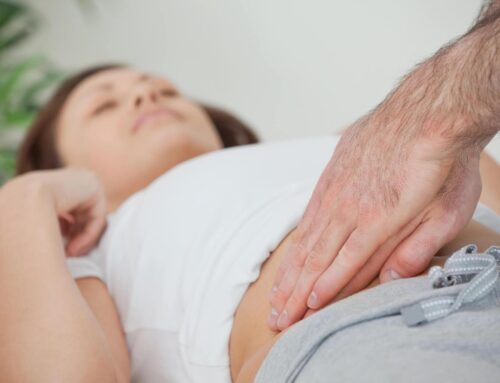
At DPT, a movement assessment looks at the hip within the context of the full system: how the lumbar spine, pelvis, and lower extremity are distributing load, where capacity is falling short, and what is driving the pattern that keeps producing symptoms. If hip pain has been limiting your movement and the answers you have gotten so far have not held, a discovery visit is a practical next step.