
If you have ever felt your body relax after a walk, a workout, or even a good stretch, you have already experienced how movement can calm the mind.
Exercise does not just strengthen muscles or improve endurance. It changes the way your brain and body communicate. For many people, movement is one of the most effective tools for managing pain, anxiety, and even chronic stress. At DPT, we often remind patients that movement is not just physical therapy for the body. It is therapy for the mind too.

How Movement Helps Reset the Brain
When you move, your body releases endorphins and serotonin, two chemicals that help regulate mood and reduce pain perception. But that is only part of the story. Rhythmic, repetitive & slow movements also activate the parasympathetic nervous system, the “rest and restore” part of your body that helps counteract stress.
For people dealing with chronic pain, this matters more than you might think. Pain and anxiety often feed into each other. The longer you feel tight, restricted, or fearful of movement, the more your nervous system stays on high alert. Purposeful movement interrupts that cycle, giving your body permission to relax and your mind a signal that it is safe again.
Why Movement Is Medicine for the Mind
Many people start physical therapy to fix an injury, only to discover how much better they feel overall: calmer, more focused, more confident. That is because physical strength and mental resilience are deeply connected.
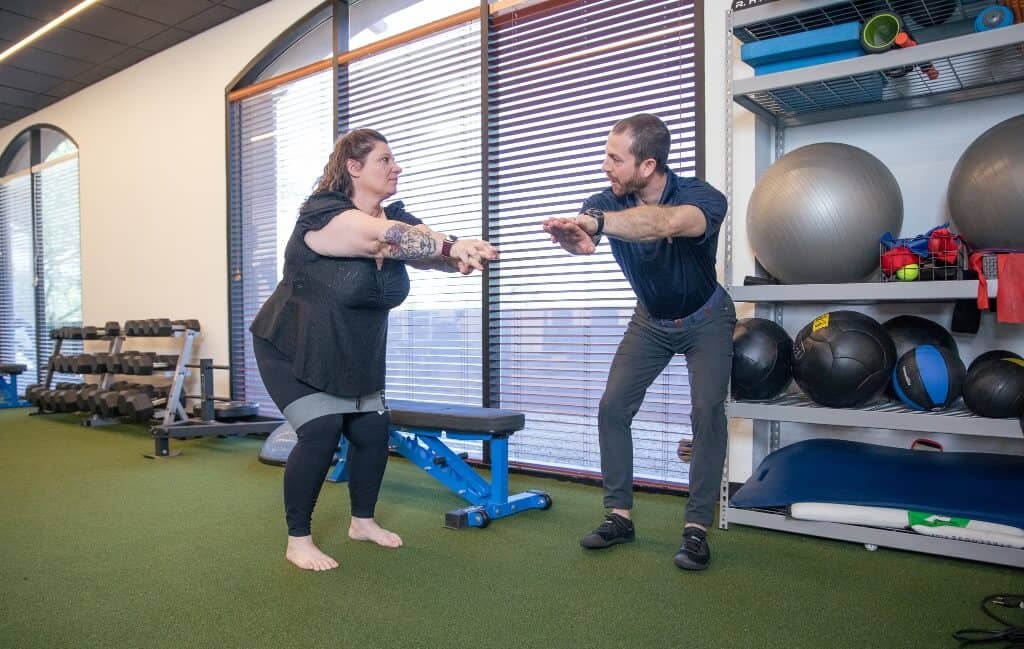
When you train your body, you are also training your brain to handle stress differently. Every squat, stretch, and mindful breath reinforces that your body is capable of more than your pain or anxiety tells you. It builds trust between the brain and the body, which is the foundation of lasting recovery.
The Science Behind Exercise, Pain, and Anxiety
Research shows that regular exercise improves neuroplasticity, which is your brain’s ability to adapt and rewire itself. This is key for people living with pain or recovering from injury because chronic discomfort often causes the brain to become overprotective.
Through consistent movement, you teach your nervous system that it does not need to sound the alarm every time you bend, twist, or lift. Over time, that reduces both pain intensity and fear of movement, two major barriers to feeling well again.
Movement Does Not Have to Mean Working Out
Many people dealing with pain want to move but feel limited by their current routine or are unsure where to start. Healing through movement doesn’t mean pushing harder or spending hours in the gym. It means learning how to move with intention so your body can recover, rebuild, and perform better.
It can be as simple as:
- Taking a walk outside to clear your mind
- Doing light mobility work between meetings
- Practicing mindful breathing with gentle stretches
- Reconnecting with the activities you enjoy, like hiking or yoga
The key is consistency and intention: moving not just to stay fit but to help your body and mind communicate better.
Finding the Right Balance Between Movement and Rest
Movement heals, but only when it is balanced with recovery. Overtraining or pushing through pain can backfire, keeping your nervous system in a stressed state. The goal is to create a rhythm of effort and recovery that allows both your muscles and your mind to reset.
This is why guided support can be so powerful. A movement specialist can help you find the right type and amount of activity for your current state of health, ensuring your progress is steady and sustainable.
The Takeaway: Move to Feel Better, Not Just to Get Stronger
Movement is medicine for the body, but it is also one of the most powerful tools for emotional healing. Whether you are recovering from an injury or dealing with daily stress, moving with purpose can help you feel grounded, resilient, and more at ease in your body.
If pain, anxiety, or stiffness have kept you from moving freely, our team at DPT in Scottsdale, AZ can help you rebuild confidence and restore balance through individualized, movement-based care.
References
- Rodrigues P, Paes F, Pereira C. Effects of Physical Exercise on Neuroplasticity and Brain Function. Frontiers in Neuroscience. 2022. PMC
- Buchman AS, Boyle PA, Yu L. Exercise-brain interaction of neuroplasticity: empirical evidence in humans and animals. Neuroscience and Biobehavioral Reviews. 2023. PMC
- Smith PJ, Blumenthal JA. Beneficial effects of physical exercise on neuroplasticity and cognition. Journal of Clinical Exercise Psychology. 2013.