

The alarm goes off. You swing your legs off the side of the bed and put your feet on the floor.
The first step is the worst. A sharp, stabbing pain in the bottom of the heel, sometimes deep in the arch, that makes you wince or shift your weight to the other foot. The next few steps are almost as bad. You limp to the bathroom, wondering if today is the day you finally do something about it.
Then something happens that most people never fully register. After about a minute of walking around, the pain fades. By the time you are in the shower, your foot feels almost normal. By mid-morning you have forgotten about it entirely. Then you sit at a desk for a few hours, stand up to grab lunch, and the pain returns, briefly, before easing again.
That pattern is not random. It is telling you something specific about what is actually happening in your foot, and once you understand it, most of what people have told you to do about plantar fasciitis will start making more or less sense.
What the Morning Pain Pattern Actually Means
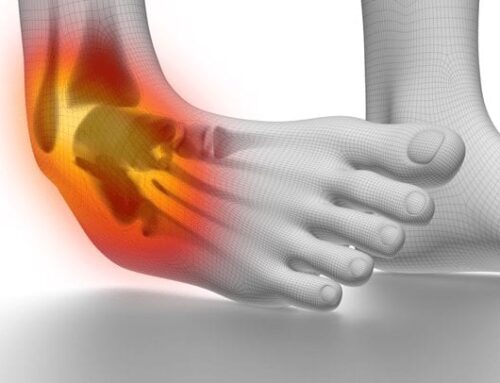
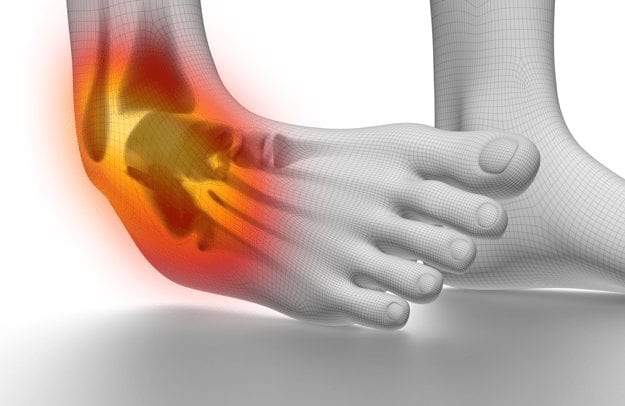
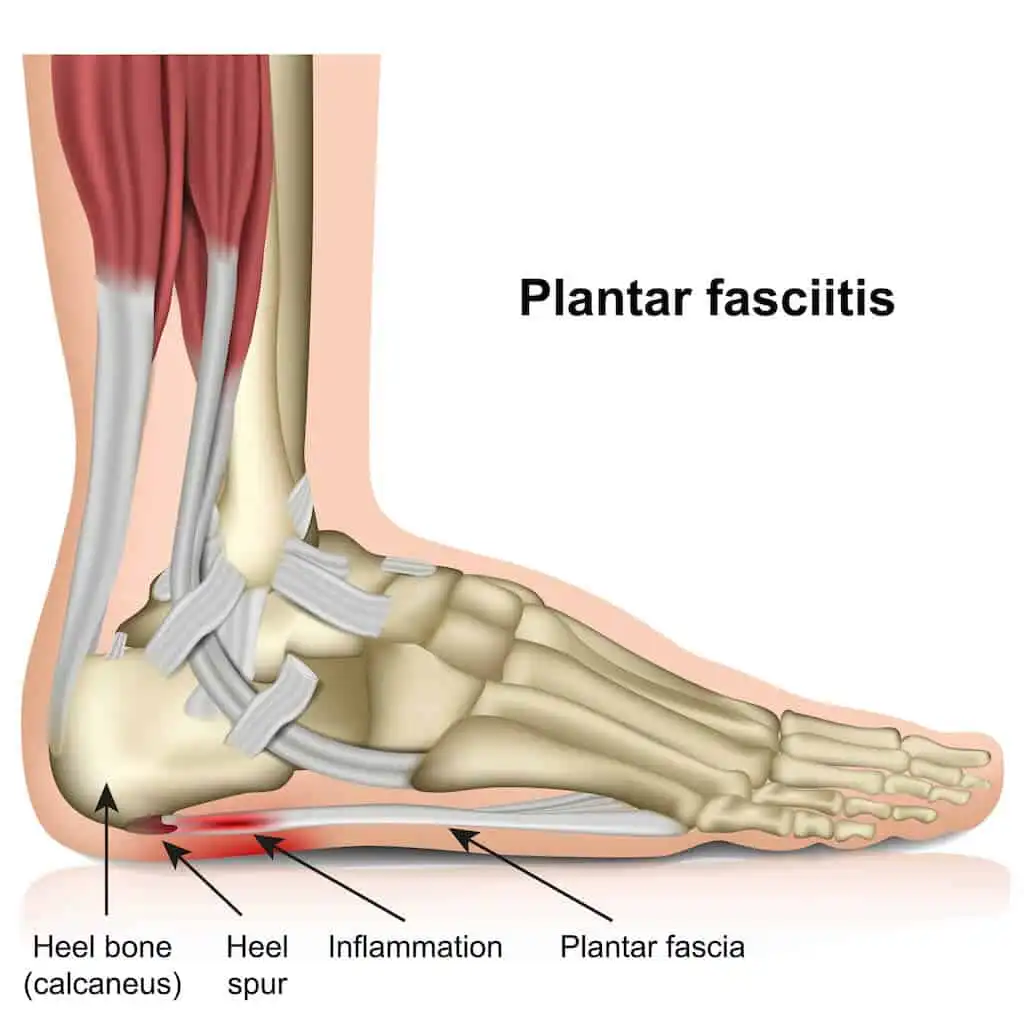
The plantar fascia is a thick band of connective tissue that runs along the bottom of your foot from your heel to the base of your toes. Its job is to help support the arch and to distribute the load your body puts through your foot every step.
At night, while you sleep, that tissue cools and shortens slightly. When you step out of bed in the morning and put full body weight through it without any warmup, the tissue is being asked to do a full day’s work while it is still stiff and cold. If the fascia is already chronically irritated, that first load is where the pain shows up. As you walk, the tissue warms up and adapts, and the pain fades. Sit still for a few hours, and the tissue partially cools again, which is why the pain returns briefly when you stand back up.
This tells you something important. The tissue is not so damaged that it cannot function. If it were, the pain would not fade as you moved. What you are dealing with is a fascia that is chronically overloaded and inflamed, but structurally intact. That is a very different clinical situation than damage, and it responds to a very different set of interventions.
Why the Fascia Is Overloaded in the First Place
Here is where most explanations of plantar fasciitis stop being useful. The story is almost always framed as if the fascia is the problem. Tight fascia, irritated fascia, damaged fascia. Fix the fascia, fix the pain.
The fascia is not the problem. The fascia is doing exactly what it is being asked to do. The problem is what it is being asked to do, and why.
A well-functioning foot has small intrinsic muscles that live entirely inside the foot itself. These muscles share the job of supporting the arch and controlling load with the plantar fascia. When those muscles are strong and active, the fascia is one member of a team. When those muscles have atrophied, which happens gradually over decades in supportive footwear, the fascia becomes the only member of the team still on the field. It takes on the full workload of a system that used to be shared, and eventually it starts to complain about it.
This is why plantar fasciitis is often described as an overuse injury but rarely responds well to rest alone. Rest reduces the load on the fascia temporarily, but it does nothing to rebuild the muscular support that would let the fascia share the work when you return to activity. The pain comes back the moment you resume normal walking, because the underlying imbalance has not changed.
The Part Most People Miss: What Your Hip Has to Do With Your Heel
There is a second driver that almost never gets addressed in standard plantar fasciitis treatment, and it lives well above the foot.
The way force reaches your foot with every step depends on what is happening at your hip. When hip stabilizers are firing well, the leg tracks in a way that lets the foot absorb load evenly. When hip stabilizers are underactive, the femur rotates inward, the knee drifts inward, the arch collapses further, and the load through the foot lands in ways it was not designed for. The plantar fascia absorbs that mismatch, step after step, every day.
This is why the same person who develops plantar fasciitis often has, on the same side, a hip that feels tight, a knee that occasionally aches, or a low back that grumbles when they walk long distances. It is one story showing up in multiple places. Treating the heel without addressing the hip is why so many people find that their plantar fasciitis calms down briefly with rest, only to return as soon as they resume their walks or their runs.
The chain works in the other direction too. When the foot is weak and cannot absorb load, the hip has to work harder to control the leg, which further disrupts the mechanics that were already contributing to the foot overload. Most patients with recurring plantar fasciitis have both problems at once, and addressing only one leaves the cycle intact.
Why the Standard Approaches Keep Falling Short
This is not a criticism of the standard advice. Most of it is reasonable. It is just incomplete.
Stretching the calf and rolling the fascia on a frozen water bottle can reduce symptoms temporarily. Both work by decreasing tension in the tissue at the moment they are applied. Neither one changes the muscular support the fascia is missing, and neither addresses the hip mechanics feeding into the problem. This is why people report that these interventions help for a few hours or a day, then the pain returns.
Night splints work by keeping the fascia at length overnight so it does not cool and shorten before morning. For some people this reduces the intensity of the first steps. It does not address why the tissue is overloaded during the day.
Cortisone injections reduce inflammation directly and can produce meaningful short-term relief. But an injection does not rebuild foot intrinsic muscles or improve hip mechanics. The relief is real. It is also almost always temporary in cases where the mechanical drivers have not been addressed.
New shoes with more support can shift the load pattern and often bring initial improvement. Over time, that additional support often makes the foot muscles work even less than they were, which can deepen the underlying weakness that started the problem. This is one of the more frustrating cycles in foot care: the intervention that relieves symptoms in the short term can worsen the driver over the long term.
Surgery for plantar fasciitis exists and has its indications, but it is rarely the right answer for the presentation this piece is describing. Cutting the fascia to release tension does nothing to rebuild the intrinsic support the foot needs to function, and the recurrence rate reflects that.
What Actually Works for Recurring Plantar Fasciitis
Addressing plantar fasciitis in a way that holds requires working on both ends of the story at once. The foot needs to be able to do more of its own job, and the hip has to stop asking the foot to compensate for it.
Rebuilding Foot Strength From the Inside Out
The intrinsic muscles of the foot respond to specific, targeted work. This looks different from generic foot exercises. It involves loading the foot in ways that ask the small muscles inside the foot to engage, teaching the arch to actively support itself rather than relying entirely on the fascia, and progressively increasing what the foot can tolerate over time. This work is unfamiliar to most people because most foot conditioning happens invisibly as a byproduct of walking barefoot on varied surfaces, which modern life has largely removed. Building it back takes time. It also produces changes that last.
Restoring Hip Function
The hip stabilizers, particularly the deep external rotators and the gluteus medius, need to activate on time and with enough force to control the leg during walking and running. When these muscles are firing well, the load reaching the foot changes meaningfully. Many patients are surprised at how much their heel pain calms down as their hip mechanics improve, which is exactly what would be expected once the driver upstream is addressed.
Regenerative Support When the Tissue Has Plateaued
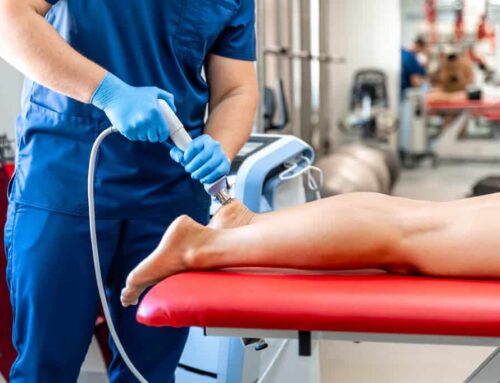
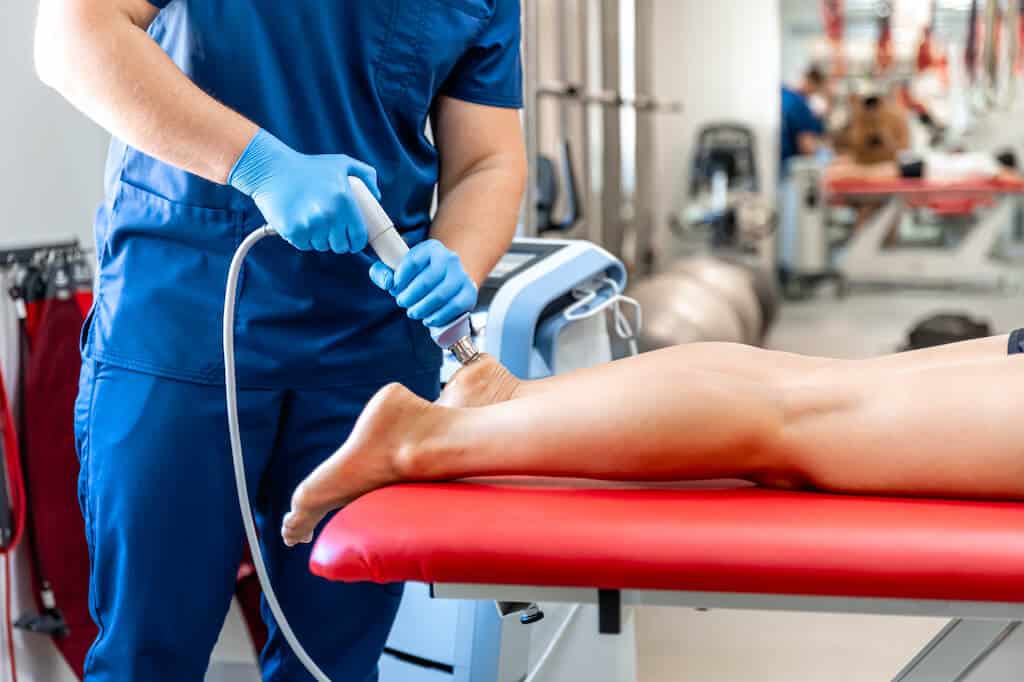
For chronic plantar fasciitis that has become stubborn, EPAT shockwave therapy has genuine evidence for helping tissue that has stalled in the healing process. It works by delivering acoustic pressure waves that stimulate blood flow and cellular repair in the fascia itself. At DPT, EPAT is used alongside the movement retraining work, not as a replacement for it. The regenerative therapy creates a tissue environment that responds better to the strengthening work being done at the same time. Neither one alone produces the same result as the two combined.
Retraining the Load Pattern During Activity
Once the strength is coming back and the mechanics are shifting, the actual walking and running pattern has to update to use the new capacity. Otherwise the body defaults to the compensations it learned during the years the foot was weak. This is where gait retraining, load progression, and specific movement work with a clinician makes the change stick.
What to Notice About Your Own Foot
There is a simple observation you can make about yourself that gives useful information about what is going on.
Tomorrow morning, before you get in the shower or put on shoes, walk barefoot on a hard floor for a minute or two and pay attention. Where does the pain sit? Is it right at the heel, deeper into the arch, or spread across the whole underside of the foot? Does one side feel worse than the other? How many steps does it take before the pain starts to fade?
Then, later in the day after you have been active for a while, notice how the same foot feels. Is there residual soreness? Does it flare when you stand up from sitting? How does it compare to the morning experience?
If your morning pain fades quickly with movement and comes back after periods of stillness, you are dealing with an overload pattern rather than a damage pattern. That is meaningful. It suggests the tissue is capable of adapting once the load and the mechanics are addressed, which is exactly what the right kind of clinical work aims to do.
When Recurring Heel Pain Warrants a Closer Look
If you have been managing plantar fasciitis for months or years, if it responds to stretching or new shoes only to return within weeks, or if you have been through the standard interventions and the pain keeps coming back, the piece that has usually been missing is not more of the same. It is an assessment that treats the foot as the middle of a longer chain rather than the whole story.
At DPT, a movement assessment looks at how your foot is functioning, what your hip mechanics are contributing to the load pattern, and where the plan needs to focus to interrupt the cycle. For chronic cases that have not responded to conservative care, EPAT is available as part of an integrated plan.
If the standard interventions have not held, more of the same is unlikely to change that. Book a discovery visit with our team to find out what is actually driving your pain and what it will take to resolve it for good.