
You know the feeling.
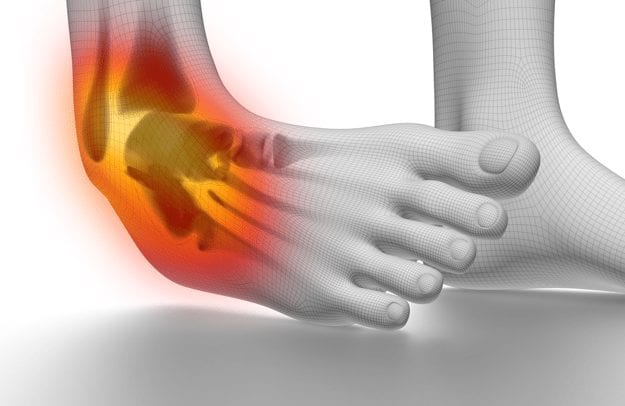
The step off the curb that goes half an inch further than it should. The stumble on the trail where the rock moves. The pickleball pivot that felt fine right up until it did not. The ankle rolls, you catch yourself, and there is a beat of nausea and heat before the swelling starts.
If it has happened to you once, that is an injury. If it has happened three or four times, that is a pattern. And the pattern is not bad luck.
Something changed inside your ankle after the first sprain. Something that never came back. And until it does, you are going to keep rolling it.
What Actually Rolled the First Time
When people describe a sprain, they talk about ligaments. And a ligament does get overstretched or torn in a sprain, which is why the ankle swells and hurts and eventually heals. But the ligament is not the interesting part of the story.
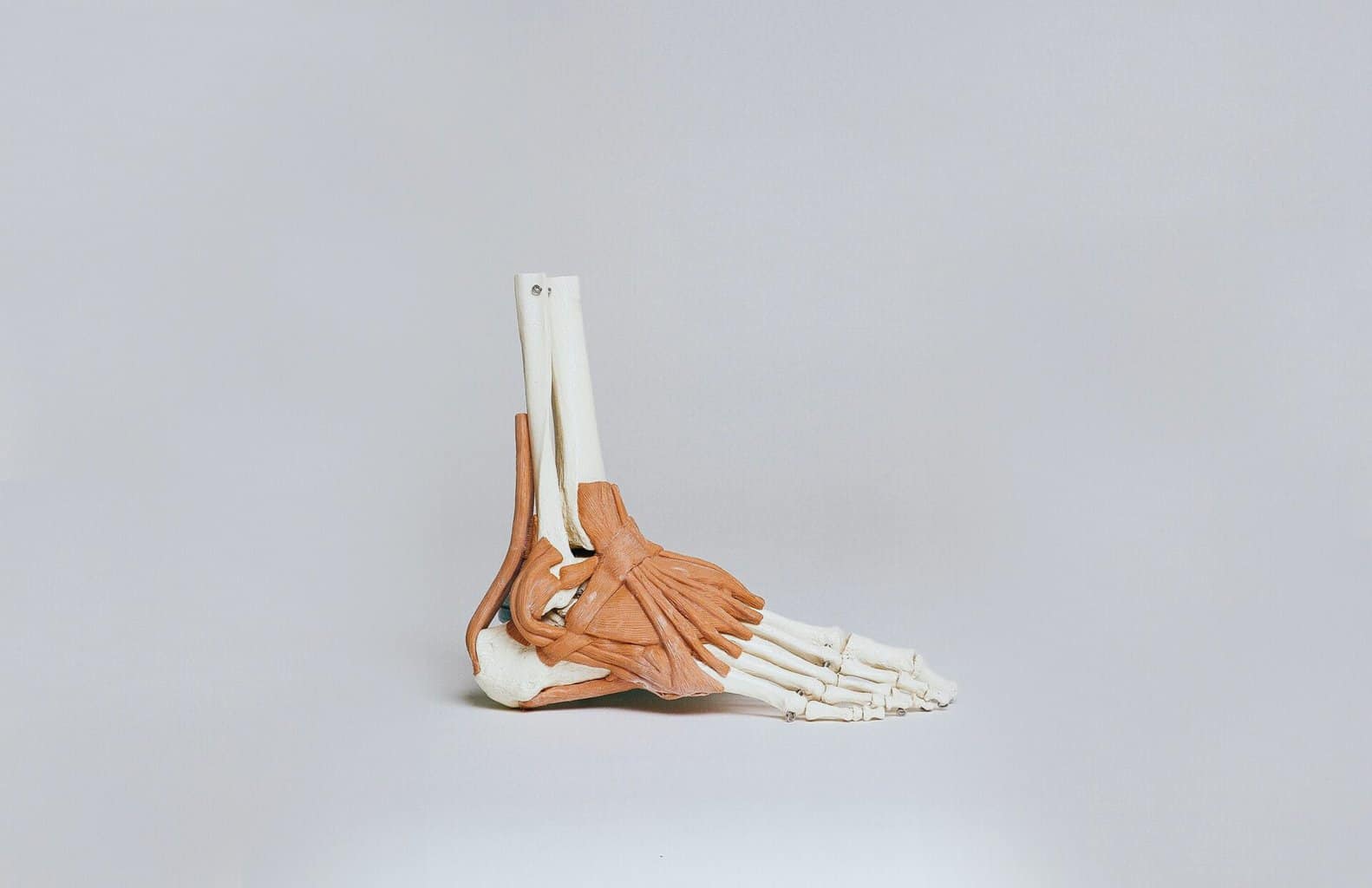
Woven into the ligaments and joint capsule of the ankle are thousands of tiny sensors called mechanoreceptors. Their job is to tell your nervous system, in real time and without your conscious involvement, exactly where your ankle is in space, how it is loaded, and how fast it is moving. That information is what allows your peroneal muscles on the outside of your lower leg to fire before you fall, catching the ankle a fraction of a second before it goes too far.
The sprain does not just tear tissue. It disrupts that sensor network. And unlike the ligament, which heals in a matter of weeks, the sensor pathway does not restore itself just because the pain has stopped.
This is what the research calls chronic ankle instability, and it explains something that would otherwise be difficult to explain: why an ankle that walks and runs and looks structurally normal on imaging keeps rolling anyway. The tissue healed. The reflex that used to protect it did not.

Why the Second Sprain Is Not About Luck
The peroneal muscles on the outside of your lower leg are supposed to fire within about 60 to 100 milliseconds when your ankle starts to invert. That is fast enough to catch the ankle before it goes past the point of injury.
After a sprain that has not been properly rehabbed, that timing gets delayed. The muscle still fires, but the signal takes longer. In that extra fraction of a second, the ankle has already rolled further than the muscles can catch it. The tissue was never quite ready. The nervous system was late to the meeting.
Multiply this by every uneven surface you step on in a day. Every time you rotate on the foot. Every awkward transition off a curb or a stair. Most of the time, nothing happens. But when something does, it happens for the same reason it did the first time. And each additional sprain further disrupts the tissue and the sensor network, which is why the frequency tends to increase over time rather than decrease.
This is why people who have sprained an ankle two or three times will often say it feels weak or unsteady, even between injuries. That feeling is real. It is not in their head. Their nervous system is telling them, correctly, that the ankle is not being protected the way it used to be.
What Most People Do After a Sprain, and Why It Falls Short
The standard trajectory after an ankle sprain looks about the same for most people. Ice for a few days. Elevate. Wear a brace or a boot if it is bad enough. Wait for the swelling to go down. Walk when it stops hurting. Return to activity when walking feels normal.
None of that is wrong exactly. But notice what is not in that list. Nothing rebuilds the sensor network. Nothing retrains the timing of the muscles that catch the ankle. Nothing loads the ankle in the specific ways that expose whether the reflex has come back or not. The rehab ends when the pain does, which is usually months before the underlying protective system has actually been restored.
This is not a criticism of the people doing this. It is what almost everyone does, including people who saw a doctor after their sprain, because the standard advice does not go past the acute healing phase. And it is why so many people who feel like they “took care of it” the first time still find themselves rolling the same ankle six months or two years later. The tissue was addressed. The system that protects the tissue was not.
What Actually Rebuilds the Ankle
Recurring ankle sprains are addressable. But the work is more specific than most people realize, and it looks different from the ankle circles and theraband exercises that get handed out in most acute care settings.
Retraining the Reflex, Not Just Training Balance
The term “balance training” is used loosely in the fitness world, and it does not always describe what needs to happen at the ankle. What actually restores protective function is not standing on one foot for longer. It is retraining the specific reflex that catches the ankle when it starts to invert, and getting the peroneal muscles firing on time.
This is done by loading the ankle in progressively less predictable environments. Unstable surfaces, dynamic movements, reactive tasks where the body has to respond to something rather than execute a planned pattern. The goal is not to make the ankle steadier in a controlled setting. It is to sharpen the reflex so it fires quickly enough to matter in the real-world moment when the ankle starts to go.
Called balance training or neuromuscular retraining, this is the work that actually addresses chronic ankle instability. The distinction matters because a lot of what gets marketed as balance training is not this. Standing on a wobble board while watching TV is not going to rebuild a protective reflex. Reactive, unpredictable, progressively harder loading will.
Getting the Right Muscles Firing
The peroneals get most of the attention because they are the muscles that catch the ankle. They matter. But they do not work in isolation. The posterior tibialis on the inside of the ankle controls how the arch loads. The intrinsic foot muscles control how the foot organizes on contact. The hip stabilizers control how the leg is oriented above the ankle when it hits the ground.
An ankle that keeps rolling despite dedicated ankle work is often being set up to fail higher in the chain. If the hip is not controlling the position of the femur, the foot lands in a mechanically unfavorable position, and the peroneals have to make up the difference every single step. Building strength and coordination through the hip and foot together is often what makes the difference between an ankle that continues to feel unreliable and one that starts feeling like it did before the first sprain.
Loading Under Fatigue and Speed
Most ankle sprains do not happen when someone is fresh and moving carefully. They happen at the end of a run, at the tail of a pickleball game, on the descent of a long hike, at speed. Rehab that only tests the ankle when it is rested and moving slowly misses the exact conditions in which reinjury actually occurs.
Meaningful ankle rehab has to include work at speed and under fatigue. Cutting drills. Change of direction. Landing mechanics. Reactive tasks. Not because these are the exercises that will make the ankle strong, but because these are the demands the ankle has to meet without giving out, and the only way to know whether it can is to place it in those demands and observe what happens.
A Simple Test You Can Do at Home
Stand barefoot on the ankle in question. Lift the other foot off the ground so you are balanced on the injured side. Close your eyes. Count how long you can stay balanced before you have to open your eyes, touch the wall, or put the other foot down.
Do it on the other side. Compare.
For most people with a well-functioning ankle, 30 seconds is unremarkable. For an ankle with chronic instability, the difference is usually obvious immediately. The eyes-closed version removes the visual system’s ability to compensate for a disrupted sensor network, which is why it exposes the deficit that eyes-open balance does not.
This is not a diagnosis, and it is not the intervention. But if the previously sprained ankle is significantly worse than the other side on that test, that is meaningful information. It confirms that the sensor and reflex work has not fully returned, which is the piece almost every ankle rehab program leaves unfinished.
When Recurring Sprains Warrant a Closer Look
A single sprain that healed cleanly and has not returned is different from an ankle that has rolled multiple times, feels unreliable on uneven ground, or gives out under fatigue. The second situation is not something that resolves with time. It resolves when the specific work that was skipped the first time gets done.
If your ankle has rolled more than once, if it feels weaker or less steady than the other side, or if you find yourself hesitating on uneven terrain or during activities that used to be automatic, an assessment can identify what is still incomplete and what needs to happen to change it.
The ankle is one of the more forgivable joints in the body when it is addressed properly. It is also one of the more punishing when it is not. If yours has been giving you trouble for years, a movement assessment at DPT is a practical place to start. A discovery visit is a good way to open that conversation.